
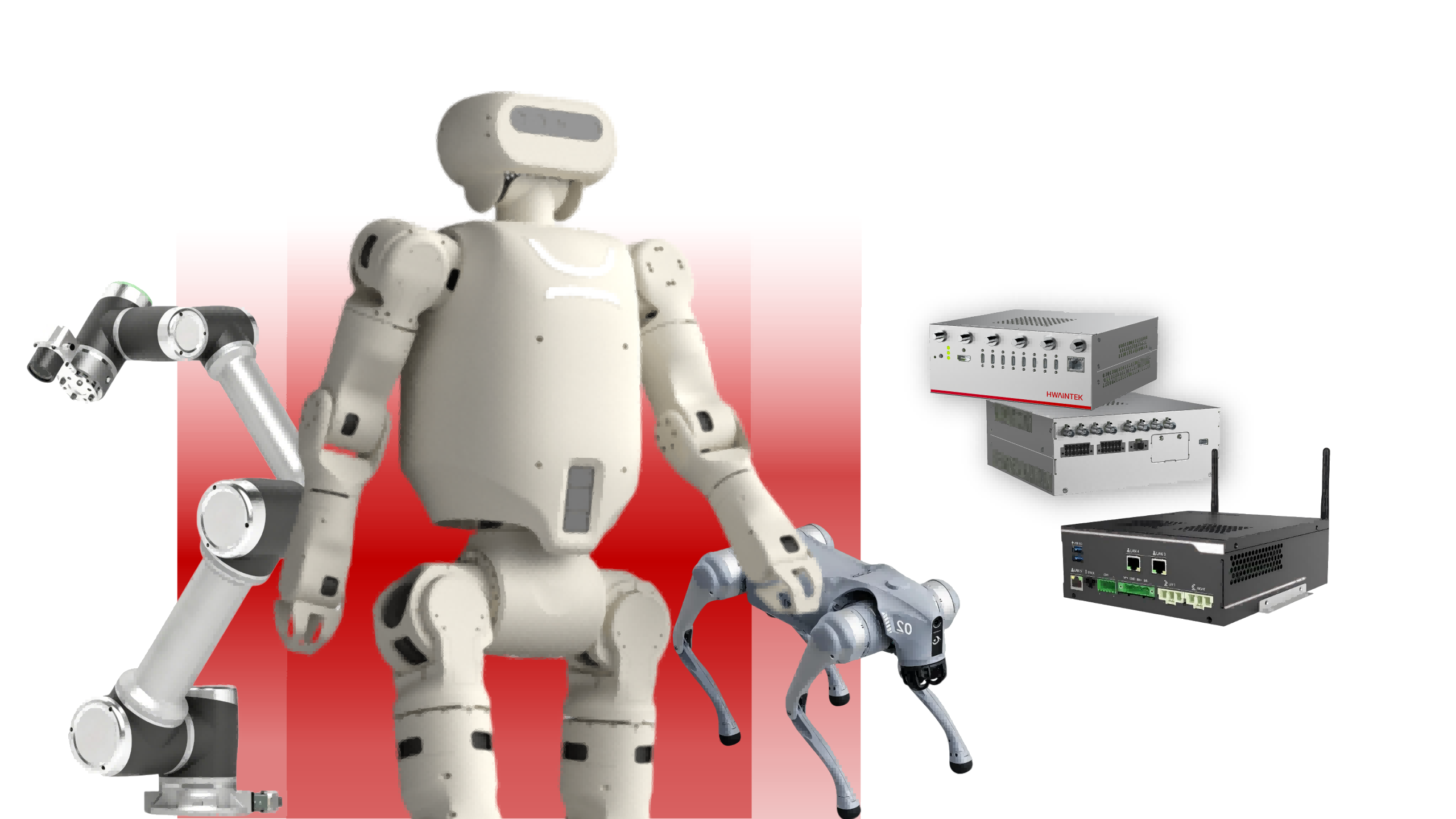
Brain and cerebellum controller for humanoid robots
In the field of embodied intelligence, humanoid robots are rapidly evolving toward general-purpose and commercialized deployment. High-degree-of-freedom motion control, real-time visual perception, and multi-modal decision fusion impose stringent demands on core computing and control units. As the critical hardware serving as the robot's "cerebrum" (high-level decision-making & perception) and "cerebellum" (motion planning & execution), HWAINTEK industrial integrated controllers undertake core tasks including visual processing, motion control, force feedback fusion, and real-time closed-loop decision-making, enabling robots to perform stable, dexterous, and efficient manipulation amid complex dynamic environments.
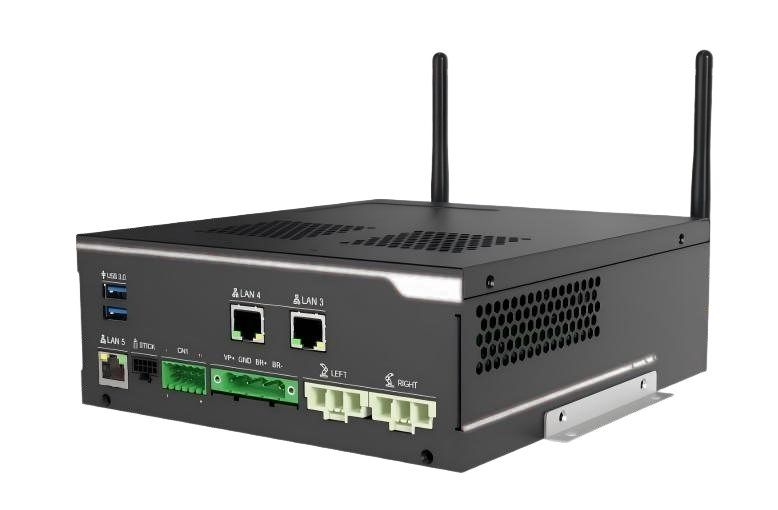
Built-in MXM Graphic Card supporting real-time sensing and decision making
Upper Limb / Dual-Arm Dexterous Manipulation Stage: Integrated Precision Motion & Force Control
Designed for dual-arm or wheeled humanoid robot architectures, this stage centers on high-precision coordinated dual-arm movement, dexterous gripper manipulation, and force-controlled interaction — the core modules enabling complex assembly, material handling, and human-robot collaboration.
Typical processes & tasks:
Coordinated dual-arm & dexterous manipulation: 7-axis or higher-DOF robotic arms replicate human-like fine motions such as grasping, insertion, and rotation, with compliant force control to adapt to objects of varying stiffness.
Vision-guided positioning: Fusion of depth cameras and multi-modal vision systems delivers spatial awareness, object recognition, and precision grasping.
Force feedback & safe human-robot interaction: Real-time collection of joint torque and tactile data allows dynamic force adjustment to prevent damage to workpieces or surroundings, while safeguarding human operators during collaborative work.
For such equipment, integrated industrial controllers are built around high-performance multi-core processors, real-time motion control kernels, and abundant expansion interfaces. They synchronously drive multiple servo axes, process massive sensor datasets, and run edge AI algorithms for fast Vision-Language-Action (VLA) inference. Equipped with low-latency real-time operating system support, high-speed fieldbus interfaces such as EtherCAT, and robust floating-point & AI computing power, these controllers handle complex motion planning and hybrid force-position control for high-DOF systems, guaranteeing sub-millimeter manipulation accuracy and millisecond-level response latency.
Whole-Body Locomotion & Mobile Manipulation Stage: Dynamic Balancing & Full-Body Coordination
Tailored to full-size bipedal or wheeled humanoid platforms such as expedition-grade models, this stage governs walking, balance maintenance, posture adjustment, and integrated mobile operation — a key capability for robots to adapt to unstructured environments.
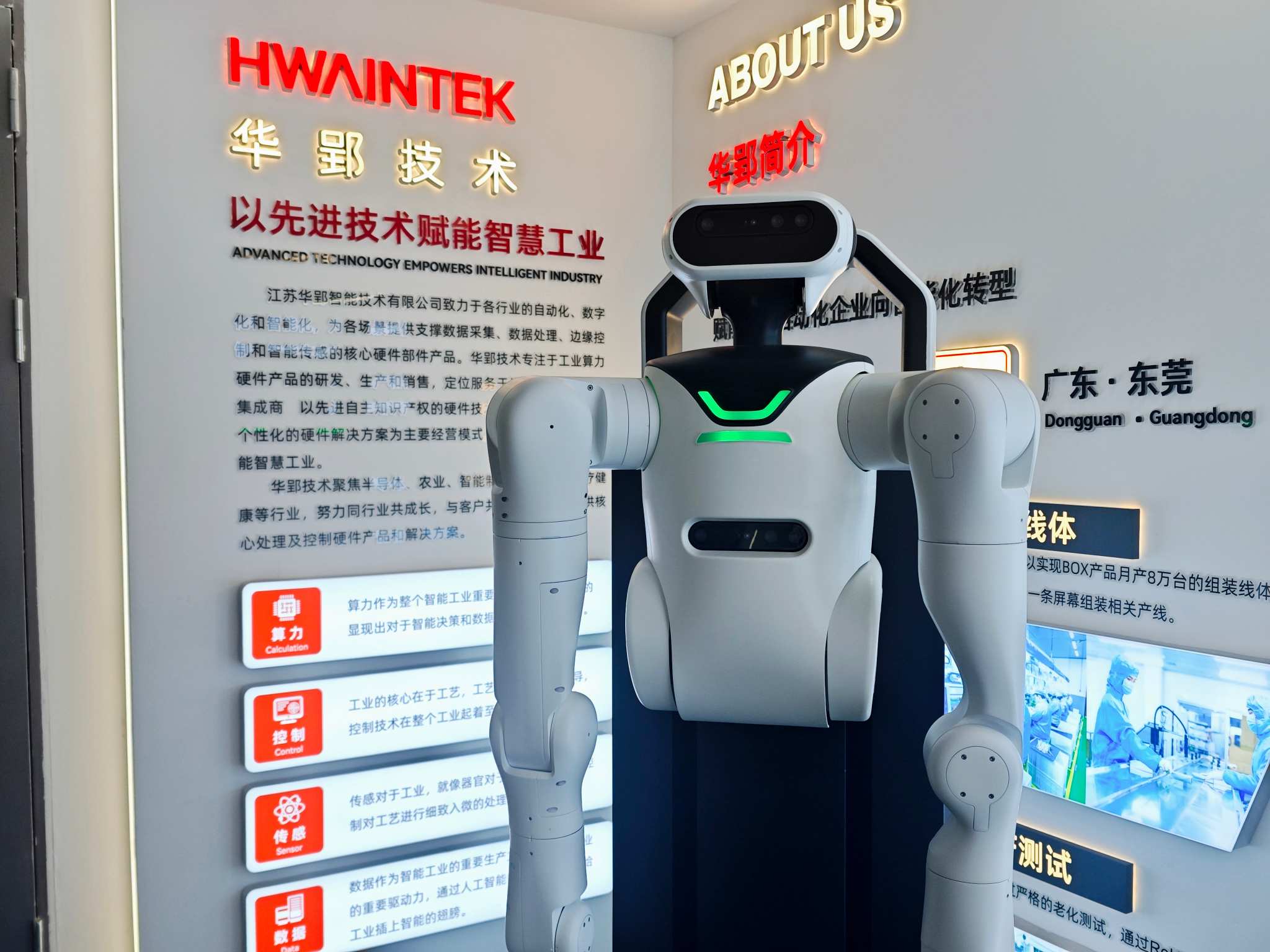
Core functions:
Dynamic gait & balance control: Real-time full-body motion planning, Zero Moment Point (ZMP) calculation, and posture stabilization control, supporting adaptation to uneven terrain and agile movements including jumping and turning.
Integrated mobile manipulation: Seamless coordination between wheeled/bipedal locomotion and upper-limb tasks to realize unified "locomotion-perception-manipulation" workflows.
Multi-sensor fusion & fault handling: Fusion of IMU, force sensor, and vision data enables predictive balance tuning and fall recovery logic.
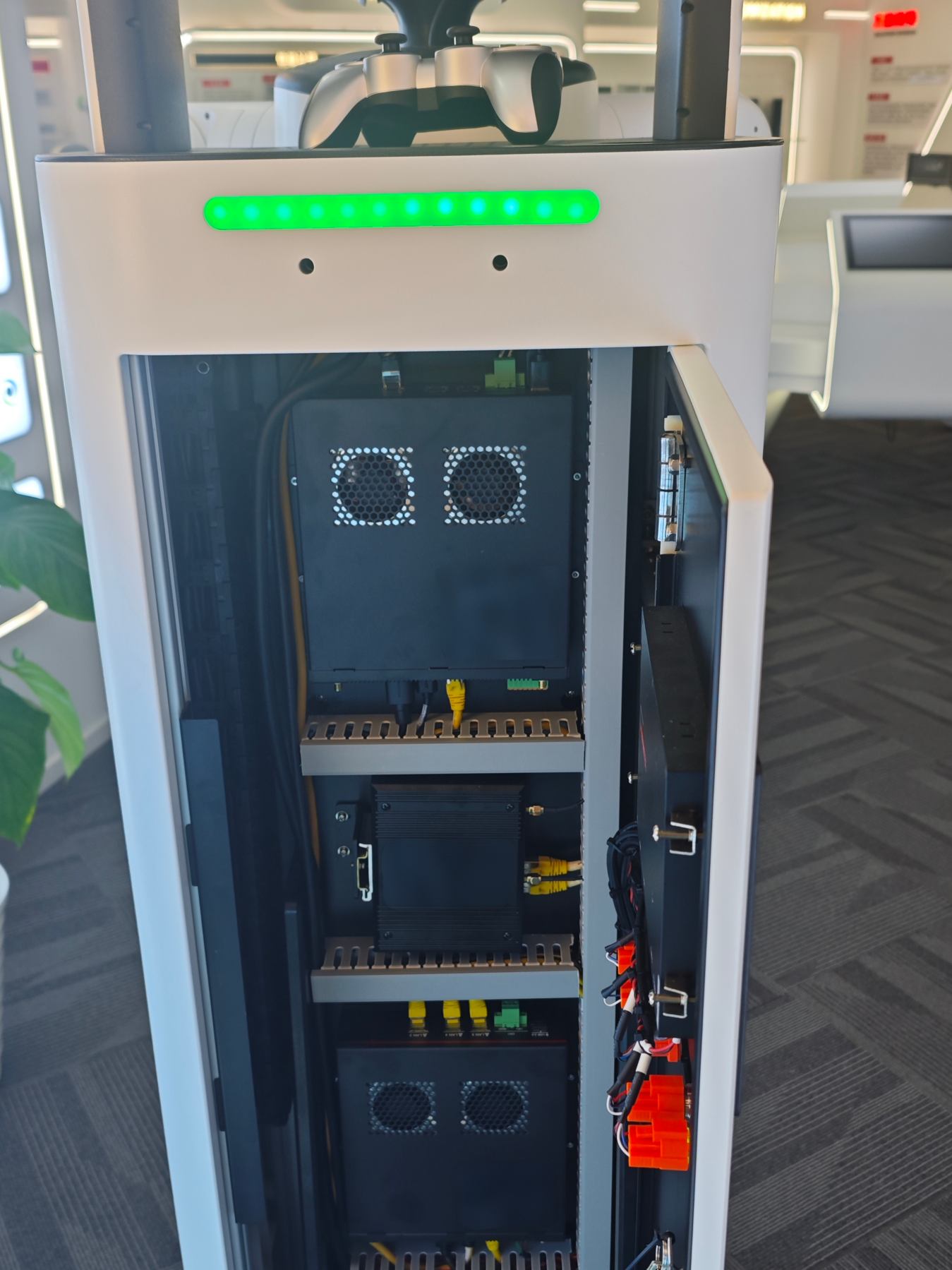
Industrial controllers act as the robot’s neural hub at this stage, integrating high-level embodied model inference with low-level motion control via a layered architecture to deliver low-latency closed-loop control from decision to actuation. They support high-compute GPU/NPU modules for vision and large language model inference, alongside deterministic real-time control channels that maintain stability and energy efficiency during high-dynamic movements. The controllers are optimized for prolonged continuous operation in commercial deployment scenarios.